Master the Curriculum
A primary maths resource business with 6,558 products, taken off WordPress and WooCommerce onto a site and a back office of its own.
The catalogue, the editor and the email are in the team’s own hands, and nothing on that site needs me to change a price or add a resource.
- What I did
- Strategy · Brand · Design · Build · Back office · Social and email
- What it is
- Custom storefront · Custom back office · Catalogue migration · Brand and artwork
- Who it is for
- Replatform, off WordPress and WooCommerce
- Status
- Live
The problem
Six and a half thousand products, and no real way to manage them.
A real business with a real catalogue, running on WordPress and WooCommerce, with only what the platform gave them to manage it.
6,558 products. Every change to any one of them meant going into WordPress and doing it by hand. There was no view of the catalogue as a whole and no way to fix anything at scale, so nothing got fixed at scale.
The product data underneath had drifted, and it was in worse shape than I expected once I started digging. Resources were named inconsistently and mapped to the curriculum inconsistently, and the curriculum is the one thing a teacher searches by. Customers were failing to find products that existed, because those products weren’t describing themselves in the words the customer was typing.
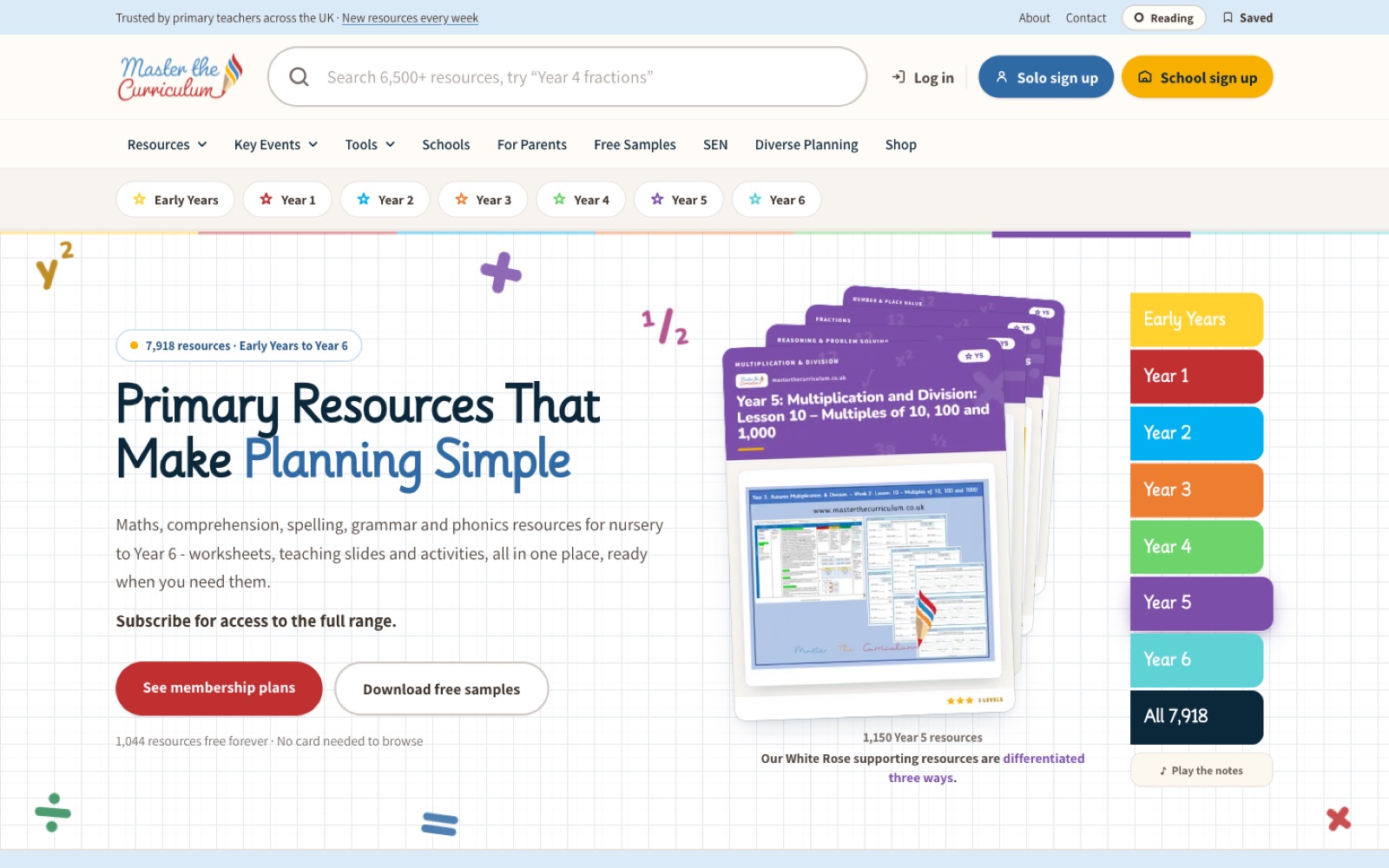
Rebuilt all of it. Site, back office, brand, social and email.
The whole business, not just the website. A new storefront designed from scratch and built to stay fast with a catalogue this size. A back office built for the job in place of what WordPress could be persuaded to do, so the catalogue can finally be managed as a catalogue. The brand and the product artwork reworked. Social and email set up to run alongside it.
The catalogue migration was the real work, and it was a slog. Moving 6,558 products isn’t an export and an import. It’s deciding what each product actually is, where it sits in the curriculum and what it ought to be called, then doing that consistently across the lot.
The point of it is that they publish. New resources, new pages, the words on the front of the site: they write them, see them, put them out, on their own, without a developer in the middle and without a monthly bill for the privilege. That is the difference between a website somebody built for you and a business you run.
What the back office covers
Described rather than shown. It’s the piece that was missing, and the piece that makes everything else maintainable.
- The full product catalogue, editable in one place
- An editor for writing and publishing new work themselves
- Curriculum mapping, by year and by topic
- Product artwork and cover generation
- Bulk changes across the catalogue rather than one at a time
- Orders and customers
- Free samples and lead capture
- Email and social, run from the same place
- One login instead of a stack of separate apps
What changed
A genuine before and after, because I have both.
This is the one project where I can show you the difference rather than describe it. The old WordPress site was captured before it came down. The one beside it is the site that is live today.
Before
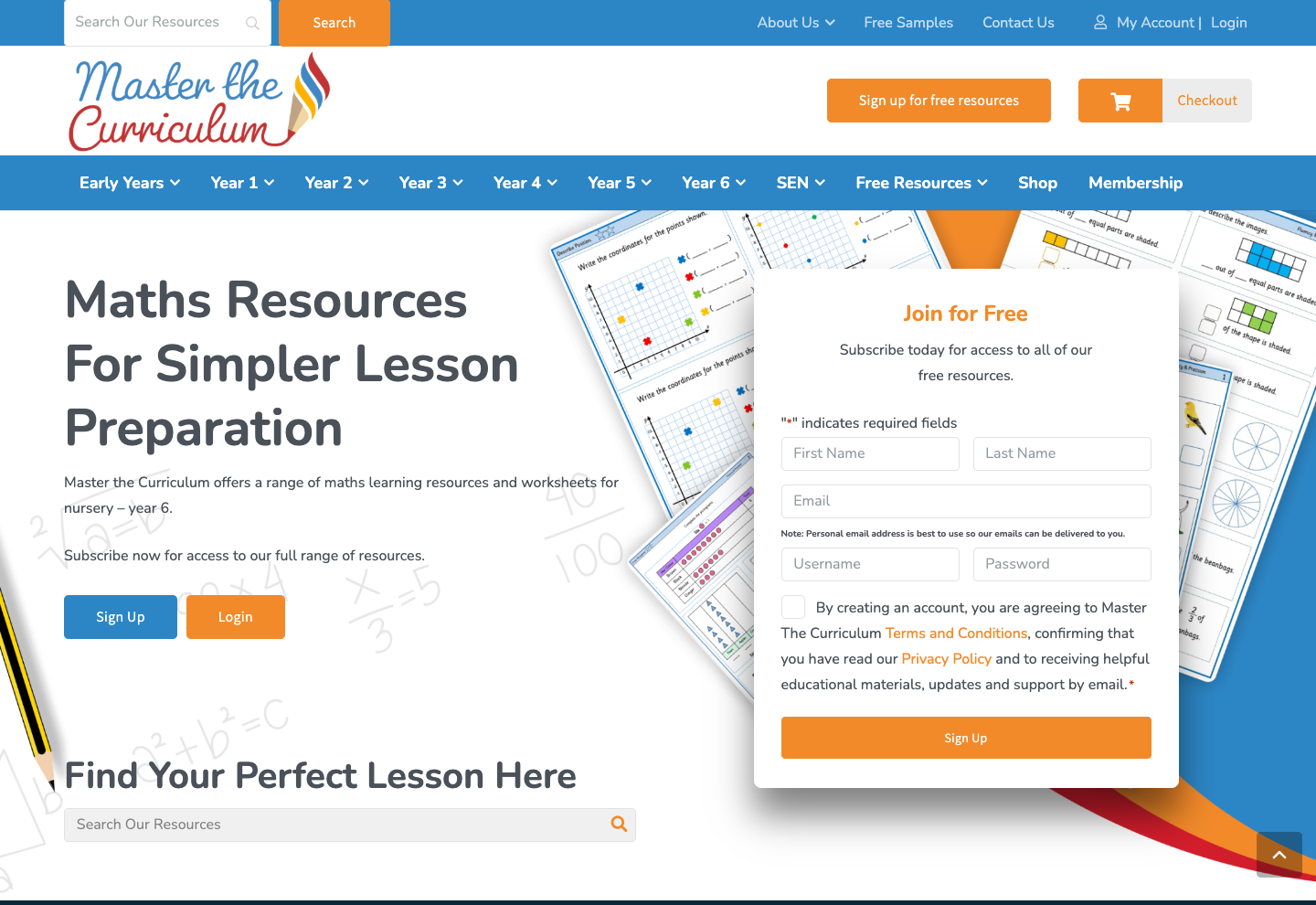
WordPress and WooCommerce, captured 3 August 2026
After
Live today
The back office is the bigger change and the harder one to show. The information used to sit across a set of WordPress screens, and some of it was not anywhere at all. It is now one place built for the job, where the catalogue is a catalogue rather than six and a half thousand separate pages. And they use it: they aren’t technical, so I went through it with them in plain words and kept them posted the whole way rather than disappearing for a month and coming back with a website.
They publish without me. New resources, new pages, the words on the front of the site. That was the point of the whole job, and it is the part that keeps paying after I have gone.
Want something like this
If the Master the Curriculum story sounds like your business, tell me about it.
No pitch and no obligation. Tell me what you’re running on now and what’s going wrong with it, and I’ll tell you straight whether it’s worth doing.